
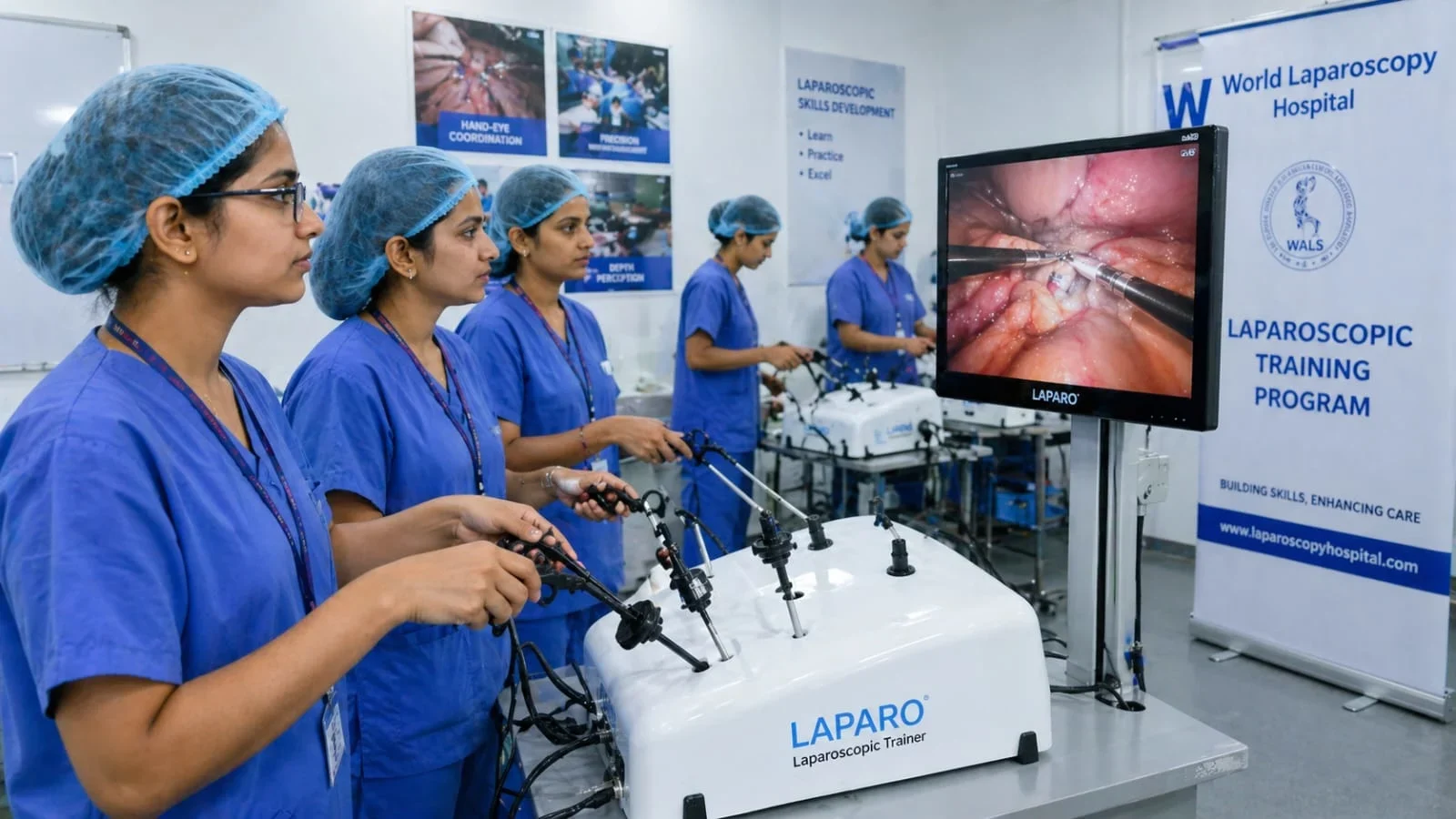
Surgery has changed quietly over the past two decades. Smaller incisions, faster recovery, better outcomes — all of it ties back to one thing: training. Choosing the right laparoscopic training institute can shape how confidently a surgeon performs in the operating room. Some programs teach theory. Others build real skill. The difference shows the moment you step into surgery.
What makes a laparoscopic training institute truly effective?
A strong training institute does more than deliver lectures. It creates an environment where surgeons repeatedly practice until movements feel natural. That difference matters. A surgeon who has only watched procedures thinks differently from one who has actually performed them under guidance.
Hands-on exposure becomes the defining factor. Watching a laparoscopic procedure might help you understand the sequence, yet skill develops when your own hands begin to coordinate inside a simulated or real surgical setup.
Another layer comes from mentorship. Experienced trainers correct small mistakes that most learners don’t even notice. Those tiny adjustments eventually build precision, and precision is what separates an average surgeon from a confident one.
Why minimal access surgery training is no longer optional
Hospitals across the world are shifting toward minimally invasive techniques. Patients ask for them. Recovery times demand them. Healthcare systems expect them.
A minimal access surgery institute prepares surgeons for this shift by focusing on techniques that reduce trauma while maintaining surgical effectiveness. Learning these methods isn’t just about staying updated. It’s about staying relevant.
Surgeons who lack these skills often find themselves limited in modern clinical environments. That gap tends to widen over time.
The role of hands-on laparoscopic training in skill development
Reading about laparoscopic techniques builds awareness. Practicing them builds confidence.
Hands-on laparoscopic training allows surgeons to understand depth perception, instrument handling, and coordination inside a controlled setup. These are not things you master through theory alone. Muscle memory takes time, repetition, and guided correction.
Live surgical training programs add another dimension. Observing real procedures while interacting with experienced surgeons helps bridge the gap between simulation and actual practice.
Many surgeons recall their first independent procedure vividly. The ones who trained practically tend to describe it as controlled. Others often describe uncertainty.
Advanced laparoscopic training center vs basic training programs
Not all institutes operate at the same level. Some focus on introductory knowledge. Others go deeper.
An advanced laparoscopic training center typically includes simulation labs, structured mentorship, and progressive skill-building modules. Training moves from basic instrument handling to complex procedures step by step.
In contrast, basic programs often remain theoretical or limited in practical exposure. They introduce concepts but rarely push the learner into real proficiency.
That distinction becomes visible when surgeons transition from training to real operating environments.
How simulation training improves surgical precision
Simulation has quietly transformed surgical education. It offers a space where mistakes carry no patient risk, yet still teach valuable lessons.
Laparoscopic simulation training often includes box trainers and VR simulation systems. These tools recreate surgical scenarios with surprising realism. Surgeons can repeat procedures multiple times, refine their technique, and build coordination.
Intracorporeal suturing training is one of the most challenging skills in laparoscopy. Simulation makes it possible to practice this repeatedly without pressure, which dramatically improves confidence later in real surgeries.
Why a center of excellence in laparoscopy stands out
Some institutes gain recognition over time. Not because of marketing, but because of outcomes.
A center of excellence in laparoscopy usually brings together experienced faculty, structured programs, and consistent results. Surgeons trained in such environments often demonstrate higher confidence and better procedural accuracy.
Reputation in medical training spreads through experience. One successful trainee often leads to many more.
Institute of laparoscopic and robotic surgery: expanding future skills
Surgery is not standing still. Robotic systems are becoming more common in advanced hospitals.
An institute of laparoscopic and robotic surgery prepares surgeons for both present and future demands. Learning robotic-assisted procedures alongside traditional laparoscopy creates a broader skill set.
That flexibility can shape long-term career opportunities. Surgeons trained in both areas often find themselves better positioned as technology evolves.
Choosing the right surgical training institute
Picking a surgical training institute can feel overwhelming. Every program promises results. Not all deliver them.
The best approach is to look beyond brochures. Focus on practical exposure, trainer experience, and program structure. Ask how much real practice is included. Ask how skills are evaluated.
A strong laparoscopic training institute will always emphasize practice over presentation. That alone tells you a lot.
Career impact of advanced laparoscopic training
Skill-based training changes how surgeons approach their work. Confidence increases. Decision-making becomes faster. Precision improves.
Hospitals also recognize trained professionals more easily. Surgeons with advanced laparoscopic training often gain access to better opportunities and more complex cases.
Patients notice the difference too, even if they cannot describe it technically.
Data Table: Basic vs Advanced Training Comparison
| Feature | Basic Training Program | Advanced Training Center |
|---|---|---|
| Practical Exposure | Limited | Extensive |
| Simulation Training | Rare | Included |
| Live Surgical Experience | Minimal | Structured |
| Skill Assessment | Basic | Continuous |
| Career Impact | Moderate | High |
FAQs
What is a laparoscopic training institute?
A laparoscopic training institute is a specialized center where surgeons learn minimally invasive surgical techniques through structured programs. These institutes combine theory with practical exposure, allowing trainees to develop real surgical skills using simulation tools and supervised procedures, which prepares them for modern operating room demands.
Why is hands-on laparoscopic training important?
Hands-on laparoscopic training allows surgeons to build coordination, depth perception, and instrument handling skills. These abilities cannot develop through theory alone. Practical experience helps reduce errors, improves confidence, and prepares surgeons for real procedures where precision and control directly affect patient outcomes.
What is minimal access surgery?
Minimal access surgery refers to procedures performed through small incisions using specialized instruments and cameras. This approach reduces pain, shortens recovery time, and lowers complication risks compared to traditional open surgery, making it widely preferred in modern medical practice.
How long does laparoscopic training take?
Training duration depends on the program. Short-term courses may last a few weeks, while advanced fellowships can extend over several months. The length usually reflects the depth of practical exposure and complexity of skills being taught.
What is laparoscopic simulation training?
Laparoscopic simulation training uses tools like box trainers and virtual reality systems to replicate surgical procedures. It allows surgeons to practice techniques repeatedly in a safe environment, improving their precision and confidence before performing on actual patients.
Who should join a laparoscopic training program?
Surgeons, medical graduates, gynecologists, and specialists looking to expand their surgical skills can benefit from laparoscopic training programs. These courses are especially useful for professionals aiming to adapt to minimally invasive surgical techniques.
What is the difference between FMAS and DMAS?
FMAS and DMAS are structured training programs in minimal access surgery. FMAS usually focuses on foundational skills, while DMAS often includes more advanced procedures and deeper practical exposure, depending on the institute offering the course.
Are laparoscopic training courses internationally recognized?
Many reputed institutes offer internationally recognized certifications. Recognition depends on the institute’s reputation, affiliations, and training quality. Surgeons should verify accreditation before enrolling in any program.
Can simulation replace real surgical training?
Simulation cannot fully replace real surgical training, but it plays a critical role in preparation. It allows surgeons to practice repeatedly without risk, making the transition to live procedures smoother and more controlled.
How to choose the best laparoscopic training institute?
Choosing the right institute involves evaluating practical exposure, trainer expertise, available technology, and course structure. Institutes that focus heavily on hands-on training and real surgical experience tend to provide better outcomes for trainees.
Conclusion
Skill in surgery is built, not assumed. The right laparoscopic training institute creates that foundation through practice, guidance, and repetition. Surgeons who invest in proper training often carry that confidence into every procedure they perform. And over time, that difference becomes impossible to ignore.
Must Visit Specimen Zero Mod APK